In 2026, plastic pollution is no longer a distant environmental issue—it is moving through
Europe’s rivers, collecting in lakes, and building up in oceans that millions of people depend on.
For young people growing up today, the reality is clear: the choices society makes now will
determine the future of Europe’s waterways.
Across Europe, plastic waste remains enormous. Recent data shows that Europeans generate
about 35.3 kg of plastic packaging waste per person each year, yet only 14.8 kg per person is
recycled.1
At the same time, Europe continues to produce millions of tonnes of plastic waste annually, and
a significant portion is still burned or sent to landfills instead of being reused.2
Globally, the problem is even larger. In 2025, researchers estimated that 31.9% of plastic
produced worldwide is mismanaged, meaning it can leak into nature—often ending up in
rivers, lakes, and oceans.3
These numbers matter because rivers act like highways for plastic pollution. Waste dropped in a
city street or carried away from a landfill can travel hundreds of kilometres downstream before
eventually reaching ocean.
What Scientists Are Seeing in European Waters
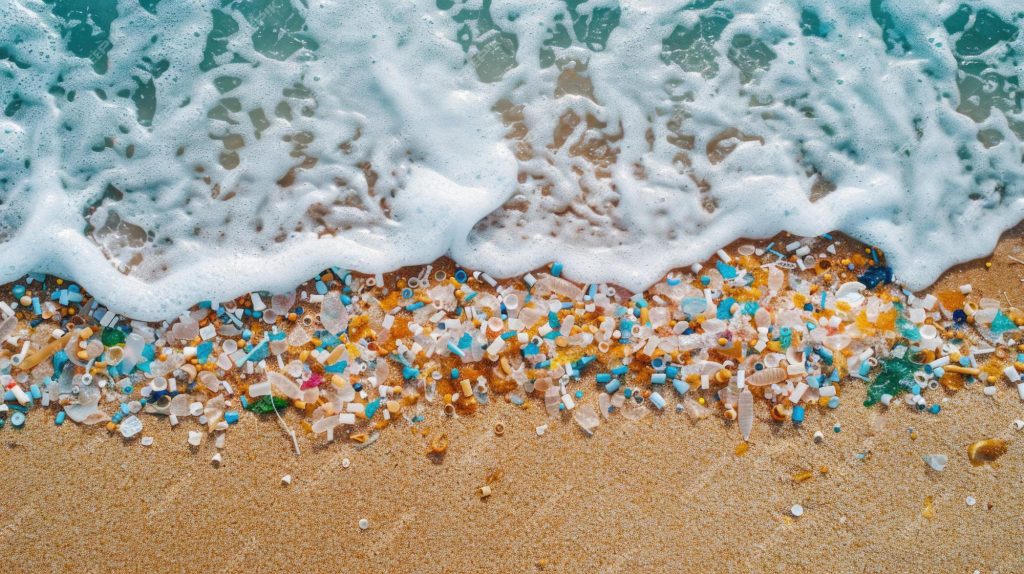
Plastic pollution has become deeply embedded in Europe’s water systems. Scientists found
microplastics in every major European river studied, demonstrating how widespread the
problem has become.4 These tiny fragments of plastic can be swallowed by fish, birds, and other
wildlife, allowing pollution to move through the entire food chain. Some studies also show that
microplastics can carry bacteria through river systems, raising concerns about ecosystem and
health impacts.5
Marine research in the Mediterranean has revealed similar findings. Scientists studying marine
life reported microplastics appearing in almost every species examined, showing how far the
problem has spread beyond rivers into ocean ecosystems.6
Plastic pollution is now affecting places once considered protected or pristine. Researchers
discovered plastic pellets—known as “nurdles”—at 84% of surveyed protected wildlife sites in
the United Kingdom7. Industrial plastic materials are reaching even sensitive ecosystems.
At the same time, investigations across Europe are increasingly examining how industrial waste,
manufacturing, and global supply chains contribute to plastic contamination in natural
environments. These cases show that plastic pollution is not only about litter—it is also about
how modern production systems operate.
Europe’s Response : Turning Awareness Into Action
While the scale of plastic pollution is alarming, many meaningful actions across Europe are also
being taken.
One important step is new European regulations aimed at reducing microplastic pollution,
including rules designed to prevent plastic pellet loss during manufacturing and transport—one
of the major hidden sources of plastic entering waterways.8
In addition, researchers and engineers are developing new technologies to intercept plastic in
rivers before it reaches the ocean. These include monitoring systems, floating barriers, and
improved detection tools that help authorities track pollution earlier and respond more
effectively.2
Across Europe, cleanup initiatives are also growing, with scientists, environmental groups, and
volunteers working together to remove waste from rivers, coastlines, and marine ecosystems.
These efforts are increasingly supported by research programs that aim not only to remove
plastic but also to understand where it comes from.
Together, these measures show a shift toward preventing pollution at its source, rather than
only trying to clean it up afterward.
Why young people are central to the solution?
Young people are not just observers of this crisis—they are key to solving it.
Across Europe, students are participating in environmental monitoring projects, awareness
campaigns, and community actions that help track pollution and change behavior. At the same
time, young voices are influencing public discussions about sustainability, climate action, and
responsible consumption.
Young people:
- Encourage families and communities to reduce plastic use.
- Spread awareness quickly through digital platforms and social media.
- Participate in citizen science and environmental projects.
- Will shape future policies, innovation, and environmental leadership.
In many ways, today’s youth are already helping drive the cultural shift needed to address
plastic pollution.
Plastic pollution is an environmental issue, connected to ecosystems, climate resilience, wildlife
protection, and human health. Researchers warn that plastics are becoming a growing global
environmental and health concern as production continues to rise.9
For Europe’s rivers, lakes, and oceans to recover, awareness must start early. When young
people understand how plastic travels through waterways and impacts ecosystems, they are
more likely to change habits, support solutions, and demand better systems.
The truth is simple: the generation that understands the problem best may also be the
generation that finally turns the tide against plastic pollution.
Footnotes
- European Commission, Eurostat. (2025, October 22). Plastic packaging waste statistics in
the European Union. https://ec.europa.eu/eurostat/web/products-eurostat-
news/w/ddn-20251022-1
- European Commission, Joint Research Centre. (2025, August 11). Can the plastics sector
become more sustainable? https://joint-research-centre.ec.europa.eu/jrc-news-and-
updates/can-plastics-sector-become-more-sustainable-2025-08-11_en
- Plastic Overshoot. (2025). Global plastic waste and mismanagement data.
https://plasticovershoot.earth/ - Le Monde. (2025, April 7). Microplastics: The invisible but massive pollution flowing
through every major European river.
- European Commission. (2025, April 24). Water salinity cuts risk of harmful bacteria
riding microplastics from freshwater to sea.
- Reuters. (2025, November 3). Mussels reveal growing microplastic pollution in Greece’s
seas. https://www.reuters.com/sustainability/climate-energy/mussels-reveal-growing-
microplastic-pollution-greeces-prized-seas-2025-11-03/
- The Guardian. (2025, November 26). Plastic nurdles found at UK sites of special scientific
interest. https://www.theguardian.com/environment/2025/nov/26/plastic-nurdles-
found-at-uk-sites-of-special-scientific-interest
- European Commission. (2025). Microplastics pollution and EU actions.
https://environment.ec.europa.eu/topics/plastics/microplastics_en - The Guardian. (2025, August 3). World in $15tn plastics crisis hitting health from infancy
to old age, report warns.