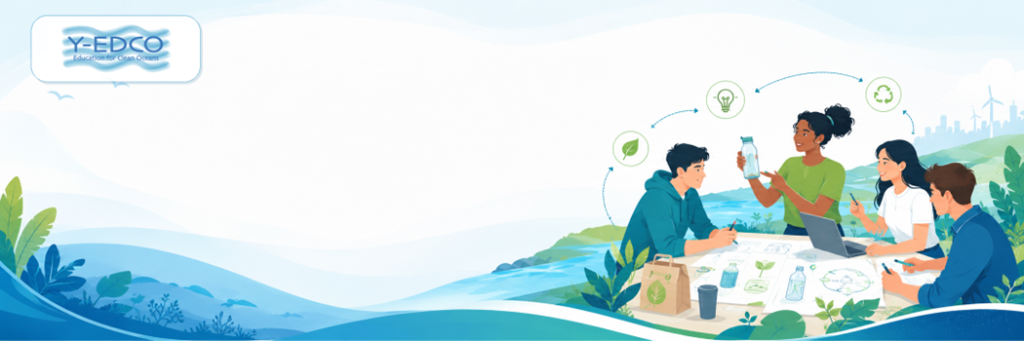
Environmental challenges can also become opportunities for innovation, entrepreneurship, and positive social impact. Y-EDCO introduces young people to this idea through educational content focused on sustainable business models, circular economy thinking, and social impact projects.
One of the project’s modules explores how problems such as plastic waste, food waste, e-waste, and resource inefficiency can inspire new ideas and practical solutions. Learners are introduced to tools such as the Opportunity Mapping Canvas and the Sustainable Business Model Canvas, helping them move from identifying a problem to designing a potential solution.
The module emphasizes a simple but powerful idea: environmental problems reveal unmet needs. When something is wasteful, harmful, inefficient, or expensive, there may be space for innovation. Young people are encouraged to think creatively about reusable packaging, repair cafes, surplus food apps, upcycling, and circular economy services.
Y-EDCO also supports the idea of social impact entrepreneurship. Another module guides young learners in designing their own ocean-focused impact projects, using tools such as the Social Impact Canvas and Theory of Change. These activities help participants identify a community challenge, understand its root causes, propose a solution, and plan first steps toward action.
By linking sustainability education with entrepreneurship, Y-EDCO helps young people see themselves not only as learners, but as innovators, community leaders, and future contributors to the green economy.